
Work-In-Process: What It Means for Your Manufacturing Company

what is wip in manufacturing

For more than 30 years, SYSTEMA has supported manufacturers on their digital transformation journeys. Our experience shows that granular work in progress inventory WIP data is not just an operational necessity—it is a cornerstone of digital transformation. The WIP account is updated on a regular basis, typically at the end of each accounting period or within preset intervals like monthly, quarterly, or biannually.

Understanding the Mu Symbol: A Deep Dive

WIP inventory refers to the partially completed products in your production line, representing the materials and effort you’ve invested before the items are ready for sale. This includes the work performed by operators, technicians, assemblers, or other personnel contributing to producing goods. In WIP manufacturing, labor represents the ongoing work and effort put into transforming raw materials into finished products. WIP manufacturing is made up of all the materials, overheads, and labor costs involved in products that are still in the process of production. By analyzing these details, you can lay out a roadmap that allows your manufacturing to become far more efficient while also reducing the costs involved with it.

  • Understanding the distinction between ‘Work In Progress’ and ‘Work In Process’ is vital for directors as it shapes inventory evaluation and operational insight.
  • Failing to account for these factors can lead to inaccuracies in COGS, impacting key financial metrics such as inventory turnover and days in inventory.
  • It links broad goals like faster delivery to practical actions like limiting WIP.
  • Because the system runs in the cloud, it’s easy to roll out across multiple lines and tweak as processes change.
  • Not only did the raw materials necessary cost money, but so did the labor, energy, and factory equipment.
  • A barrier is that some operators or organizational structure/policies may hinder this way of thinking.
  • WIP may also abbreviate to work-in-progress inventory but the two phrases are generally used intermittently in manufacturing and accounting.

Strategies for Effective WIP Management

what is wip in manufacturing

These components are essential for calculating work in balance sheet process inventory and determining a company’s overall production expenses. You need to have contingency plans in place to address potential issues before they arise. This could include having backup equipment on hand, maintaining good relationships with multiple suppliers, and regularly reviewing your production process to identify potential bottlenecks. Easy to run solutions for retail and e-commerce businesses, optimizing inventory management, order fulfillment, and customer experience, driving efficiency and profitability. Wholesale & Dealership – Warehouse automation solutions for wholesalers and dealerships, optimizing inventory management, order fulfillment, and operational efficiency to boost profitability and reduce errors. Automating WIP management becomes a game-changer by significantly reducing the hours spent on monitoring and controlling the manufacturing process.

what is wip in manufacturing

Benefits of Managing WIP ⚙️

what is wip in manufacturing

It provides granular visibility into the work being done and highlights areas for improvement. When work is started on more items than can be completed within the desired cycle time, work slows down while waiting on parts or people. Establishing limits keeps the amount of work lower, eliminating inventory and allowing for more predictable lead times. Let Red Stag’s expert 3PL services streamline your production flow and maximize your profitability.

what is wip in manufacturing

Tighten up your production processes

You can think of WIP inventory as all inventory that has not yet reached the finished product inventory but is not raw materials. As your operations grow in scale and complexity, manually filling and tracking spreadsheets can become error-prone. When you reach this point, you should invest in software that will automate your inventory management and production management tasks. When your raw inputs enter the manufacturing process, they actually gain value because of the labor and overhead costs (from factory equipment, for example) that goes into them. Think of WIP as the story explaining what’s happening between your raw materials at the starting point of your production process, and the finished goods at the end of it. A powerful outcome of automated WIP management is the creation of granular WIP telemetry including arrival rates, process times, rework loops, and equipment states.

  • In the context of WIP manufacturing, raw materials refer to the initial components or inputs that have been partially processed but are not yet in their final form.
  • Without increasing capacity, adding more material to the factory floor creates longer queues at each machine, which in turn extends lead times.
  • A considerable amount of capital can be tied up in WIP inventory, reflecting an investment that has yet to yield profit and cannot be immediately liquidated.
  • It’s essential for directors to maintain an accurate count of WIP inventory items to ensure smooth production flows and prevent stock shortages or surpluses that could impact financial stability.
  • This is the foundation of your production, and optimal material availability is vital to your entire manufacturing business.

Organizations can get insights into their inventory levels by precisely determining the value of partially completed units after a production cycle. The classification of inventory as WIP is essential for accurate accounting and management in the manufacturing process. For manufacturers and packaging companies, WIP encompasses the items that are undergoing processing or assembly, including unfinished goods at various stages on production lines.

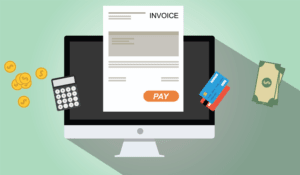
AI Invoice Processing:A Complete guide to AP Invoice Automation

How to Process Invoices in AP Automation

AP automation provides a transformational solution by streamlining the entire invoice-to-pay process, reducing inefficiencies and mitigating risks. When considering automation solutions, pay careful attention to the pricing structure and your current and projected future invoice volumes to ensure you maximize your savings. This metric is a good benchmark for the average cost of manual invoice processing. Yes, modern AP automation solutions are designed to integrate with virtually all major accounting and ERP systems. The biggest benefit of AP automation is the dramatic reduction in manual processing time. Most companies find their AP team can handle significantly higher invoice volumes without adding staff.

  • However, traditional AP processes often rely on manual workflows, leading to inefficiencies, errors, and increased operational costs.
  • This real‑time integration reduces posting failures by 90 percent, keeps your general ledger in sync, and shortens month‑end close cycles by up to 50 percent.
  • It streamlines invoice entry, approvals, and payments but offers less flexibility for complex workflows.
  • The AI compares key fields like item descriptions, quantities, and prices to identify discrepancies.
  • Providing multiple payment options is essential for customer satisfaction and operational efficiency.
  • In the sections that follow, we’ll break down each vendor by target use case, key features, pricing, pros and cons, integrations, and ideal customer profile.

Power features

CoreIntegrator’s solution can automatically makes electronic payments by check, ACH or wire transfer. This saves somewhere between $2 and $4 for each manual check you currently cut. So if your company processes thousands of invoices per month your savings and ROI will be multiplied. The cost to use A/P One to process the daily average 25 invoices used in our AP calculation would be about $37.50. And the hard labor cost savings/day shown in the case study above is $113.00.

How to Process Invoices in AP Automation

Invest in AP Technology to Scale and Modernize Operations

  • Many platforms include supplier self-service portals where vendors can submit invoices, track their status in real time, and view payment details.
  • AP automation solutions allow buying organizations to receive invoices, manage approvals and process payments automatically, via a single platform.
  • Despite automated AP solutions, finance teams continue to dedicate considerable time to manual invoice handling, with many teams spending multiple days each month purely on processing tasks.
  • The system captures the details at header and line levels, classifying invoices as PO or non-PO and auto-coding non-PO invoices to appropriate GL code combinations.
  • For the complete PDF that covers the benefits of AP automation, what to look for in an AP automation provider, and how to build a business case for your organization, download the full guide below.

Based on new market research, this blog explores why most solutions fall short—and how Ascend delivers the seamless integration, ROI clarity, and intelligent automation they’re asking for. ‍After matching, invoices are automatically categorized by expense type, department, or project code, making retrieval simple for accounts payable automation technology audits or financial reviews. Let’s go back to our AP calculation on a company processing 500 invoices a month.

Strategies for Improving Accounts Payable Automation

Automation simplifies audits, maintains proper documentation, and minimizes the chance of penalties. Finance teams can rely on accurate, up-to-date tax data while focusing on strategic initiatives rather than manual calculations. Systematically verify invoice prices against agreed pricing data to catch discrepancies early. This allows organizations to identify pricing discrepancies, duplicate charges, or unauthorized fees before payments are made.

  • According to industry experts, businesses can cut processing costs by up to 80%.
  • These core technologies form the foundation for various AI-powered invoice processing solutions.
  • Automating invoice processing speeds up approvals, reduces errors, and ensures accurate financial reporting.
  • Manually reviewing every invoice for errors, discrepancies, or missing information is time-consuming and can lead to processing delays or payment errors.
  • The average cost to manually process an invoice is $15.96 compared to $2.94 per invoice for best-in-class AP teams that have implemented automation.

How to Process Invoices in AP Automation

These agents continuously refine their extraction models via https://www.bookstime.com/ feedback loops, dramatically reducing the need for manual validation. Dynamic approvals use machine learning capabilities to auto-suggest approvers for specific invoices. Predefined approvals require you to define approvals using an approval workflow builder. This involves verifying the correct payment amount, method, and recipient details. In traditional systems, controllers or CFOs manually review and sign off on payment batches, a time-consuming process.

How to Process Invoices in AP Automation

How to Process Invoices in AP Automation

This technology eliminates errors common in manual processing by validating information against purchase orders and contracts. Additionally, AI learns from historical payment trends to improve its ability to detect discrepancies, flag duplicates, and identify potential fraud. AI ensures payments are made on time by considering payment QuickBooks Accountant terms, early payment discounts, and cash flow needs, minimizing late fees and maximizing savings. Without automation, finance teams had to manually track due dates, enter payment details, and schedule disbursements, leaving room for missed deadlines and lost discount opportunities.